Rhinoplasty
A second operation after a rhinoplasty done elsewhere — a careful, structural correction from a board-certified ENT & head-neck surgeon, with an honest read of what is realistic.
Revision rhinoplasty corrects the shape or the breathing after a previous nose operation — whether it healed unpredictably, left you unhappy, or affected your airway. It asks more of the surgeon than a first operation: there is scar tissue, altered anatomy and often less cartilage to work with.
Because of that, every revision begins with a full structural reassessment — what was done before, what remains, and what is realistically achievable now. As a board-certified ENT & Head-Neck surgeon, Dr. Barışkan assesses the airway alongside the shape.
The aim is an honest, stable improvement — not a promise to erase the first surgery, but a nose that reads as yours and breathes well.
Typical ranges for a straightforward case. Your own plan — technique, timings and anaesthesia — is confirmed at consultation.
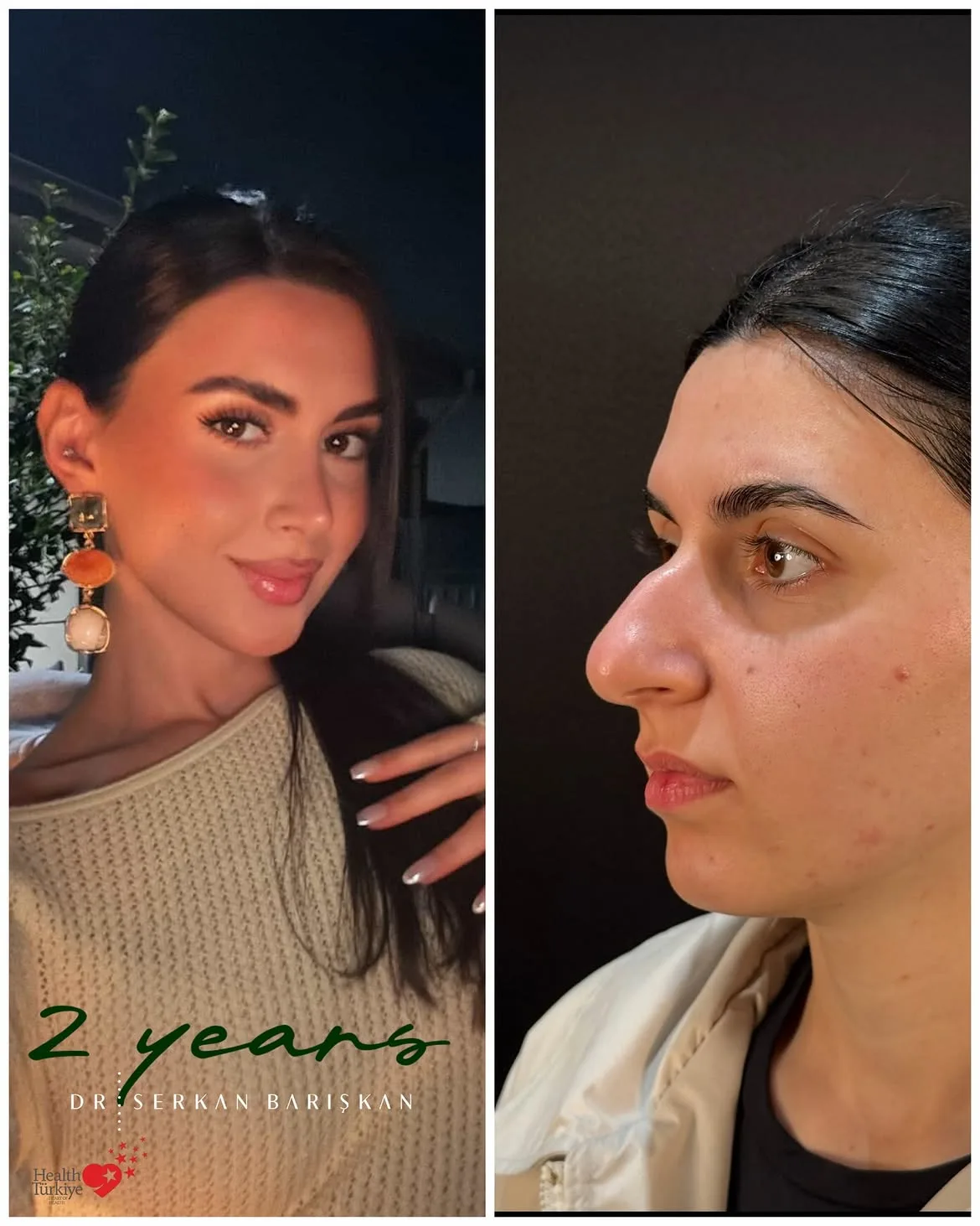
Real patients, photographed before surgery and again at long-term follow-up.
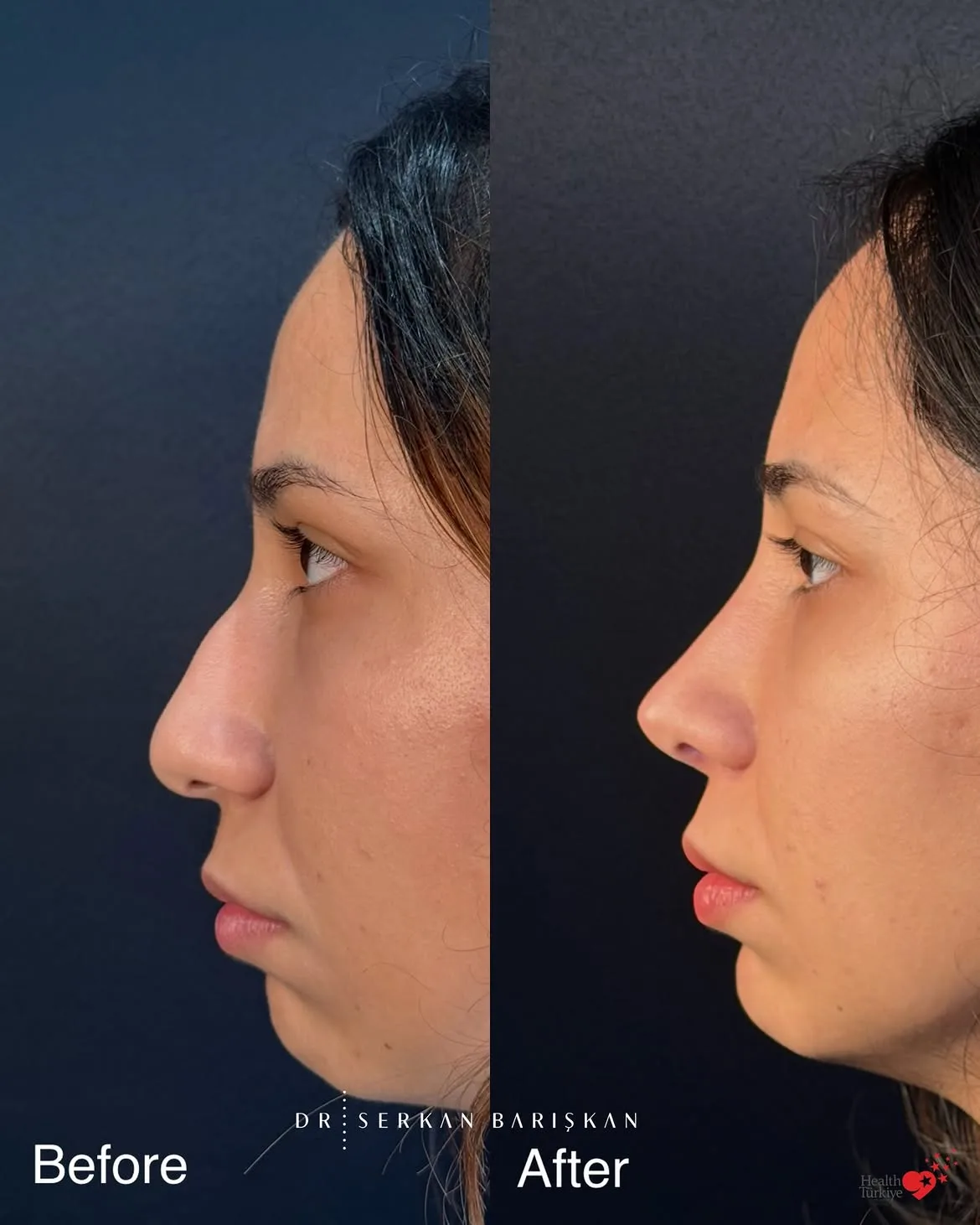
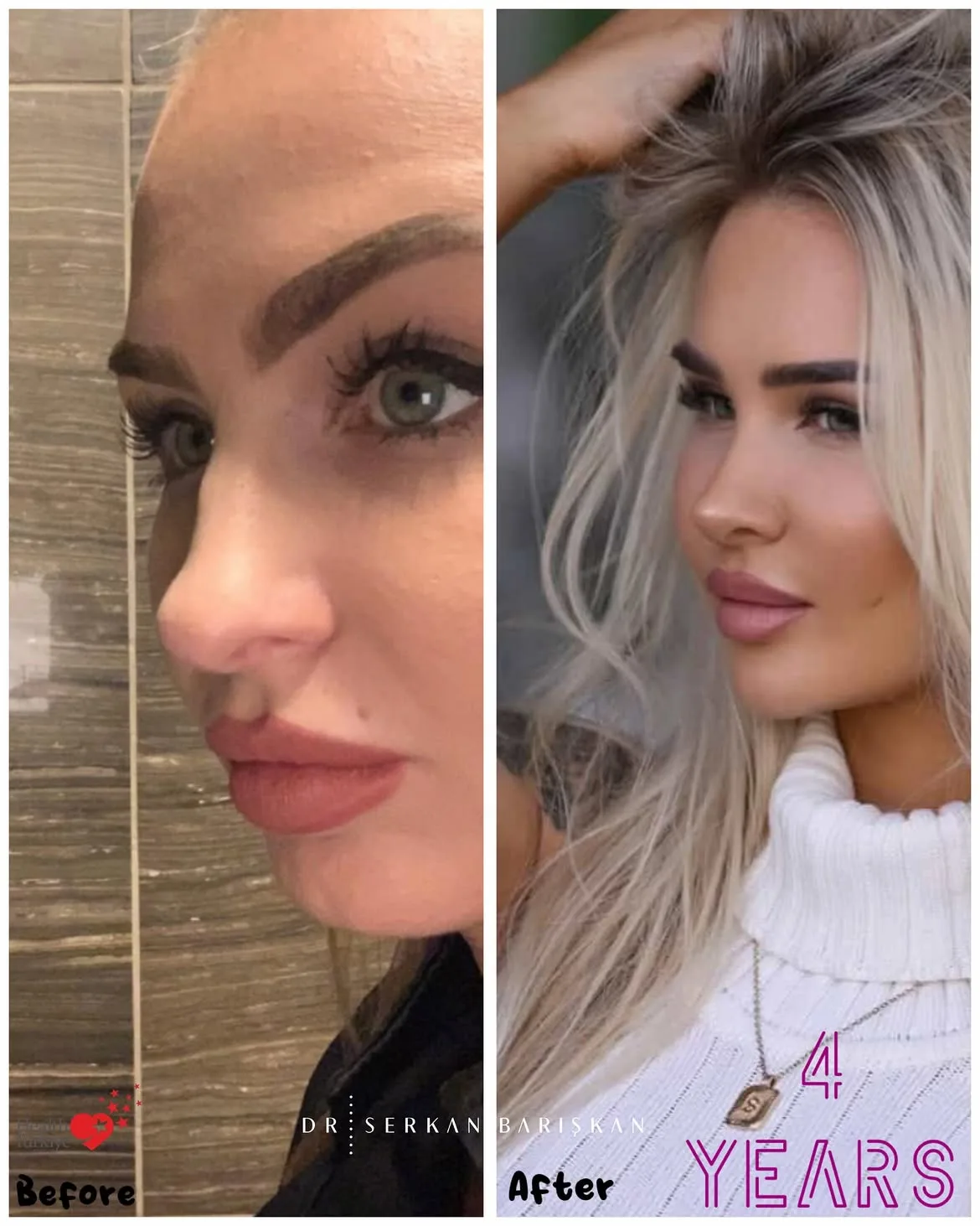
With every surgical or interventional procedure, results may vary from person to person.
A revision has to rebuild before it refines. Trained as an ENT surgeon, Dr. Barışkan restores support and the airway first — function first, then form.
An open approach through a tiny, well-hidden incision gives a clear view of the framework — for precise, predictable work.
Cartilage is reshaped and reinforced so the tip holds its definition over years, not just weeks.
As an ENT surgeon, Dr. Barışkan assesses the septum and internal valves — so a deviation is corrected alongside the shape.
Support grafts from your own cartilage keep the result steady as everything settles.
A previous operation left you struggling to breathe through one or both sides.
Ask about this →Too much bone or cartilage removed — a scooped, weak or collapsed profile.
Ask about this →A nose that healed crooked, twisted or uneven from the front.
Ask about this →A tip that lost support, looks pinched, or has fallen over time.
Ask about this →Visible edges, bumps or irregularities you can see or feel.
Ask about this →A nose that looks done rather than natural — softened back toward your own features.
Ask about this →There is no fixed price list. What a revision involves — how much was changed in the first surgery, whether the airway needs correcting, whether cartilage grafts are needed — changes the quote, so you get a personalised figure after your consultation.
Share photos — front, profile, three-quarter and base view — and receive a personalised plan and cost estimate, with no obligation.
I'd been to two consultations before this one, and both opened with a photo of someone else's nose. Dr. Barışkan started with mine — he measured the angles of my own profile and explained what was structurally causing the hump before he ever mentioned what he'd do about it. Fourteen months on it still looks like my face, just resolved.
My first rhinoplasty was done elsewhere and I was never told why the result didn't hold. Dr. Barışkan spent most of the consultation on that previous surgery — what had been removed, what was left to work with, and what was realistic now. He was direct that a revision has limits.
From the first video call to the follow-up two years later, none of it felt like a sales process. The team answered in English within a day, every time. The clinic ran to schedule. I flew home on day seven with a written plan for what to expect month by month.
I went for the look. The thing I actually notice every day is that I can breathe through both sides. He flagged the deviation in the first consultation from photographs alone.
It's more demanding — there's scar tissue, altered anatomy and often less cartilage to work with. It usually takes longer and needs a more detailed assessment.
Not always to the same degree. Revision has limits set by what remains after the first surgery — we're honest about what's realistic before anything is agreed.
Generally around 12 months, so the tissues have fully settled — unless there's a breathing or urgent structural problem that needs attention sooner.
Often, yes. Cartilage — usually from your septum, ear or rib — is used to rebuild support where it was lost in the first operation.
Frequently. As an ENT surgeon, Dr. Barışkan assesses and corrects the airway alongside the shape.
Yes. Many revision patients had their first operation elsewhere — we begin with a full reassessment from your photos and history.
There's no fixed price — revision complexity varies a lot. You get a personalised figure after your consultation.
Revision swelling settles more slowly than a first operation — the final, refined result usually shows over 12–18 months.
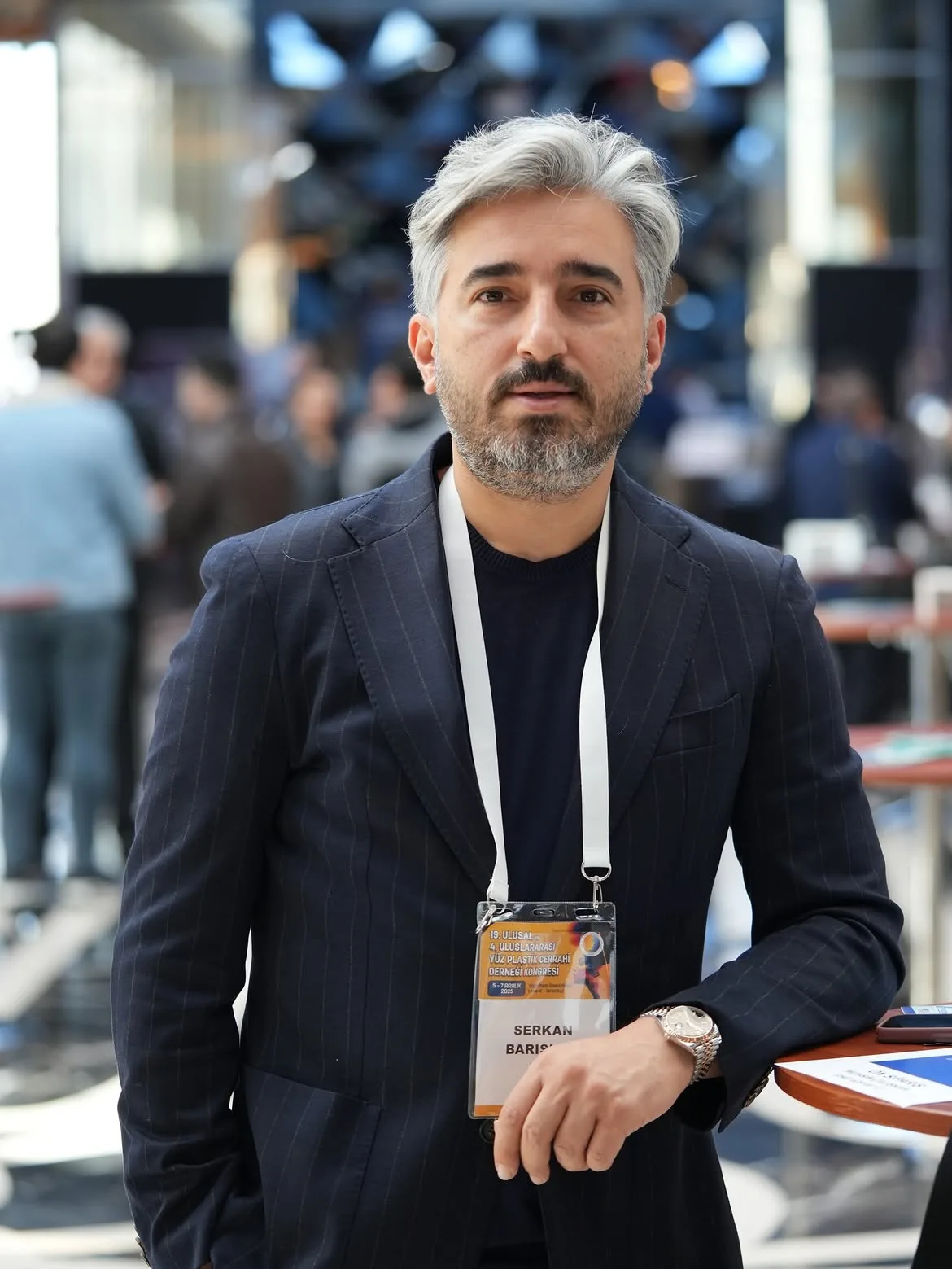
Last reviewed July 2026. The clinical information on this page is written and reviewed by the operating surgeon. It is general guidance, not a substitute for a personal consultation.
Send a few photos and tell us what you'd like to change — you'll get a personalised plan and cost estimate, with no obligation.