
Rhinoplasty
Refining the nose without erasing what makes it yours — structural technique that supports and reshapes rather than simply reduces, from a board-certified ENT & head-neck surgeon.
Ethnic and structural rhinoplasty refines the nose while keeping the features that make you look like yourself. There is no single ideal applied — the plan starts from your own proportions and your heritage, not a borrowed template.
Structural means the framework is reshaped and supported — often with grafts from your own cartilage — rather than simply reduced. That matters for a nose with thicker skin or softer cartilage, where over-reduction removes support and the result doesn't hold.
The goal is a refined, balanced nose that still reads as yours — not a nose borrowed from another face.
Typical ranges for a straightforward case. Your own plan — technique, timings and anaesthesia — is confirmed at consultation.
Real patients, photographed before surgery and again at long-term follow-up.


With every surgical or interventional procedure, results may vary from person to person.
Refinement without collapse depends on support. Trained as an ENT surgeon, Dr. Barışkan reinforces the structure and airway first — function first, then form.
An open approach through a tiny, well-hidden incision gives a clear view of the framework — for precise, predictable work.
Cartilage is reshaped and reinforced so the tip holds its definition over years, not just weeks.
As an ENT surgeon, Dr. Barışkan assesses the septum and internal valves — so a deviation is corrected alongside the shape.
Support grafts from your own cartilage keep the result steady as everything settles.
Refined and defined, while keeping the character of your own features.
Ask about this →A smoother, straighter profile shaped to your proportions — not flattened.
Ask about this →Clearer tip definition, built with support where thicker skin hides fine changes.
Ask about this →Nostril and base width balanced to the rest of your face, where needed.
Ask about this →Cartilage grafts reinforce the framework so the result lasts, not just looks good early.
Ask about this →The septum and airway assessed and corrected alongside the shape.
Ask about this →There is no fixed price list. What structural rhinoplasty involves — how much support and grafting is needed, whether the airway needs correcting — changes the quote, so you get a personalised figure after your consultation.
Share photos — front, profile, three-quarter and base view — and receive a personalised plan and cost estimate, with no obligation.
I'd been to two consultations before this one, and both opened with a photo of someone else's nose. Dr. Barışkan started with mine — he measured the angles of my own profile and explained what was structurally causing the hump before he ever mentioned what he'd do about it. Fourteen months on it still looks like my face, just resolved.
My first rhinoplasty was done elsewhere and I was never told why the result didn't hold. Dr. Barışkan spent most of the consultation on that previous surgery — what had been removed, what was left to work with, and what was realistic now. He was direct that a revision has limits.
From the first video call to the follow-up two years later, none of it felt like a sales process. The team answered in English within a day, every time. The clinic ran to schedule. I flew home on day seven with a written plan for what to expect month by month.
I went for the look. The thing I actually notice every day is that I can breathe through both sides. He flagged the deviation in the first consultation from photographs alone.
No — that's the whole point. It refines your nose while keeping the character of your face; it isn't about giving you a different, generic nose.
It can. Thicker skin shows fine changes less, so definition comes from structure and support underneath rather than aggressive reduction — and it settles more slowly.
Often, yes. Cartilage from your own septum, ear or rib is used to build definition and lasting support.
Frequently. As an ENT surgeon, Dr. Barışkan assesses and corrects the airway alongside the shape.
The principle is the same, but the emphasis is on preserving identity and supporting the structure rather than reducing it.
Definition keeps refining for a while — with thicker skin, the final result can take 12–18 months.
Most patients plan for 5–7 days, covering the assessment, surgery and cast removal before flying home.
With an open approach the only external incision is a tiny one across the columella, which typically fades to near-invisible.
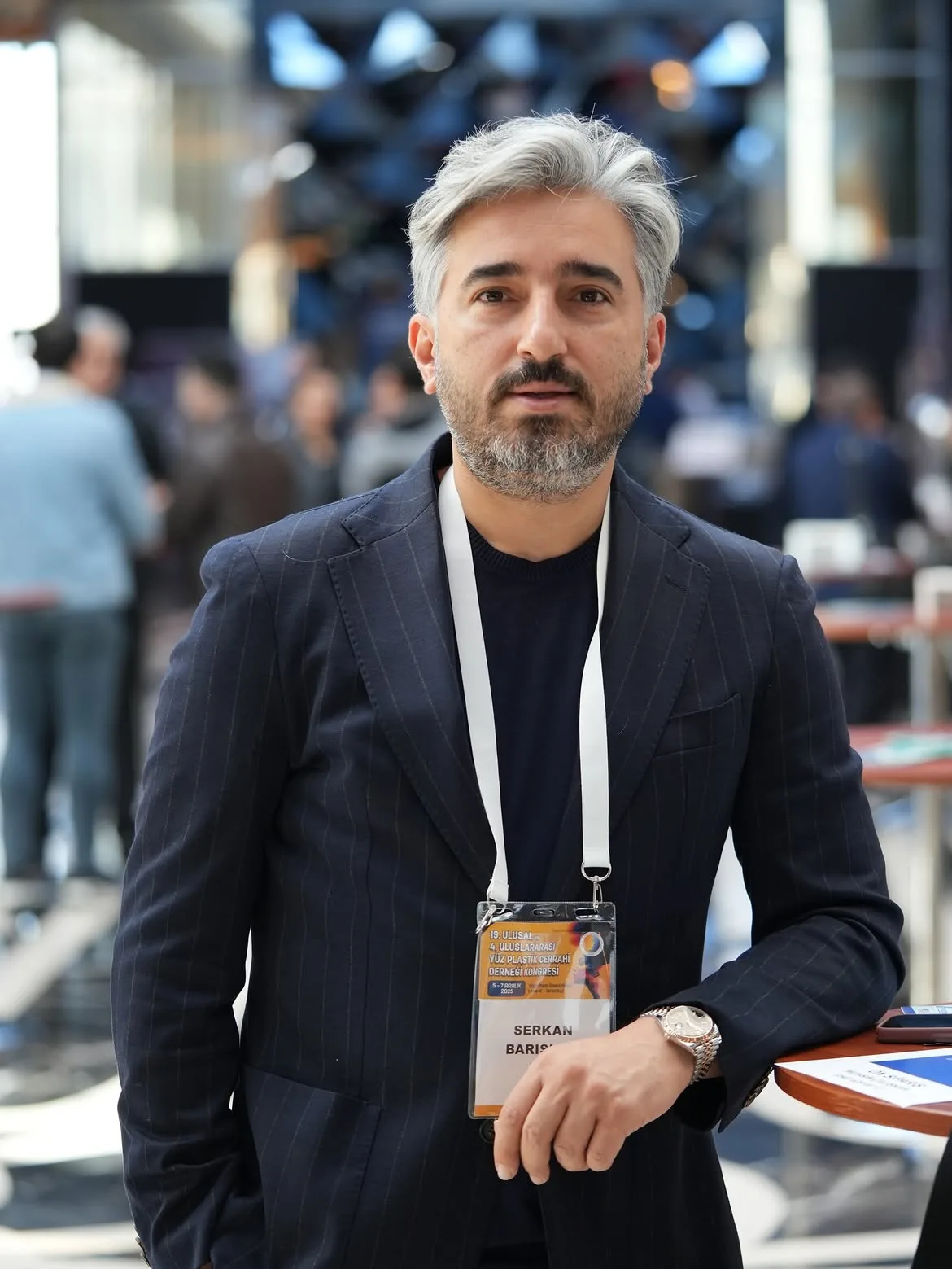
Last reviewed July 2026. The clinical information on this page is written and reviewed by the operating surgeon. It is general guidance, not a substitute for a personal consultation.
Send a few photos and tell us what you'd like to change — you'll get a personalised plan and cost estimate, with no obligation.