
Rhinoplasty
Refinement limited to the nasal tip — for a nose whose bridge already sits right. A focused, structural procedure that defines the tip without changing the rest.
Tipplasty reshapes only the tip of the nose — defining, narrowing or gently lifting it — while leaving the bridge and the rest of the nose untouched. It suits people whose profile is already good but whose tip is bulbous, droopy, wide or under-defined.
Because it is focused, it is less involved than a full rhinoplasty — but it is still structural. The tip cartilage is reshaped and supported, not simply trimmed, so it holds its shape and does not drop over time.
It is not a shortcut for a nose that needs more. If the bridge or your breathing also need work, we will say so — a full rhinoplasty would serve you better.
Typical ranges for a straightforward case. Your own plan — technique, timings and anaesthesia — is confirmed at consultation.
Real patients, photographed before surgery and again at long-term follow-up.


With every surgical or interventional procedure, results may vary from person to person.
A refined tip has to be a supported tip. Trained as an ENT surgeon, Dr. Barışkan rebuilds the tip's structure rather than just trimming it — so it holds, and doesn't drop back.
An open approach through a tiny, well-hidden incision gives a clear view of the framework — for precise, predictable work.
Cartilage is reshaped and reinforced so the tip holds its definition over years, not just weeks.
As an ENT surgeon, Dr. Barışkan assesses the septum and internal valves — so a deviation is corrected alongside the shape.
Support grafts from your own cartilage keep the result steady as everything settles.
A rounded, undefined tip narrowed and defined.
Ask about this →A tip that hangs or drops on smiling, gently lifted and supported.
Ask about this →Broad tip cartilage refined to a cleaner point.
Ask about this →A tip that sits too far out, or too little, brought into balance.
Ask about this →Cartilage support so the refined tip holds, not drops back.
Ask about this →Small asymmetries of the tip evened out.
Ask about this →There is no fixed price list. How much tip refinement is involved, and whether it is done open or closed, changes the quote — so you get a personalised figure after your consultation.
Share photos — front, profile, three-quarter and base view — and receive a personalised plan and cost estimate, with no obligation.
I'd been to two consultations before this one, and both opened with a photo of someone else's nose. Dr. Barışkan started with mine — he measured the angles of my own profile and explained what was structurally causing the hump before he ever mentioned what he'd do about it. Fourteen months on it still looks like my face, just resolved.
My first rhinoplasty was done elsewhere and I was never told why the result didn't hold. Dr. Barışkan spent most of the consultation on that previous surgery — what had been removed, what was left to work with, and what was realistic now. He was direct that a revision has limits.
From the first video call to the follow-up two years later, none of it felt like a sales process. The team answered in English within a day, every time. The clinic ran to schedule. I flew home on day seven with a written plan for what to expect month by month.
I went for the look. The thing I actually notice every day is that I can breathe through both sides. He flagged the deviation in the first consultation from photographs alone.
Yes. Only the tip is worked on, so it's more focused — but it's still a structural operation done properly, not a quick trim.
That's exactly who it suits. If the bridge and profile already sit right, there's no need to touch them.
It shouldn't. The tip cartilage is reshaped and supported with grafts, so the refined shape holds rather than falling back.
Often, yes — a tip that pulls down on smiling can be lifted and stabilised.
Usually a little. There's less swelling than a full reshaping, though the tip is the slowest area to fully settle.
If done open, a tiny incision across the columella that fades to near-invisible; some tips can be refined closed, with no external scar.
Most patients plan for 5–7 days, covering the assessment, surgery and review before flying home.
You'll see a change early, but the tip is the last part to settle — the final refinement shows over 6–12 months.
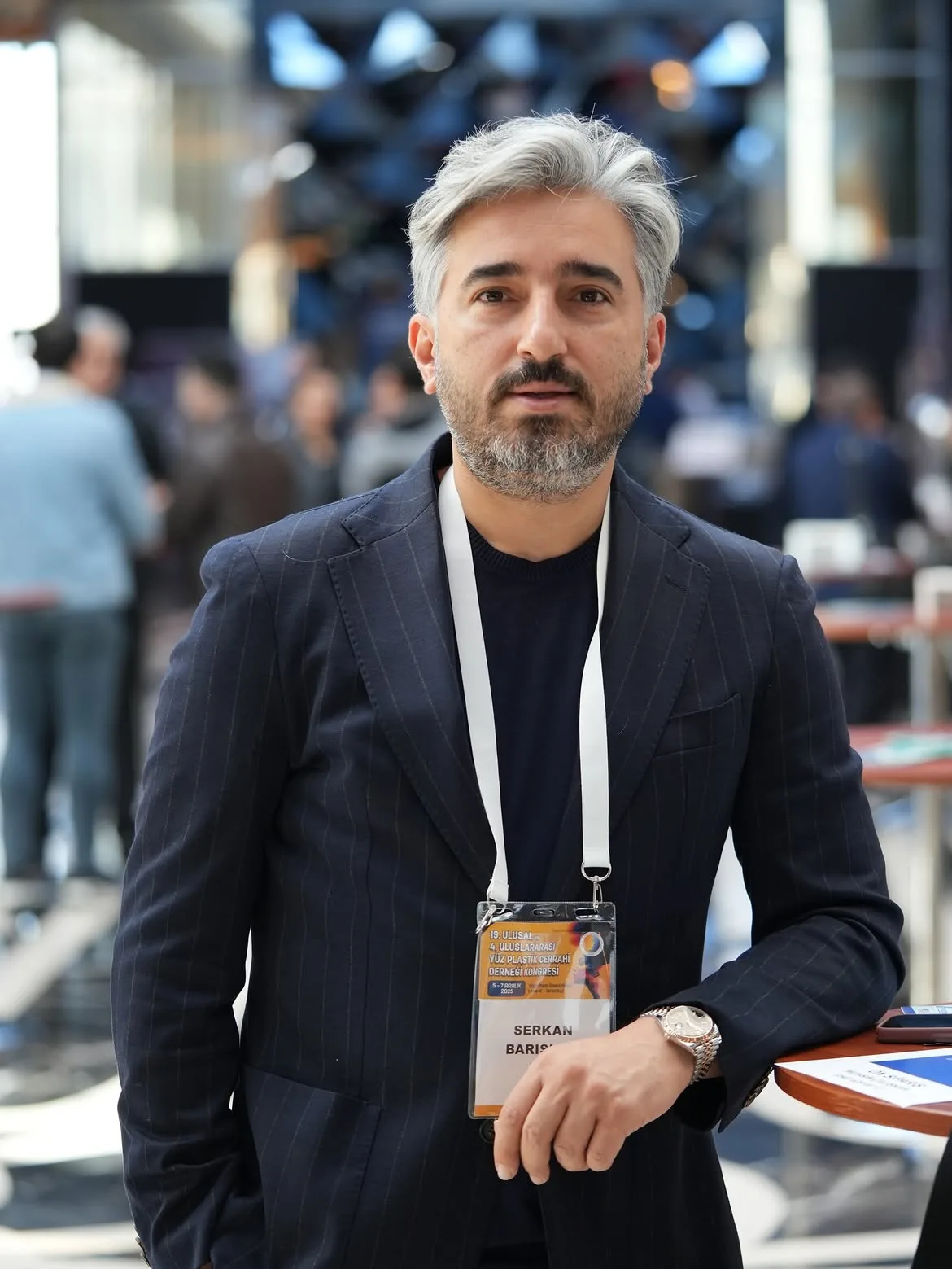
Last reviewed July 2026. The clinical information on this page is written and reviewed by the operating surgeon. It is general guidance, not a substitute for a personal consultation.
Send a few photos and tell us what you'd like to change — you'll get a personalised plan and cost estimate, with no obligation.